Wall Street Keeps Buying the AI Trade Even as It Bets on a Bubble
A Bank of America survey found 37% of fund managers raised tech allocations in October, the most since 2020, while 45% simultaneously expect an AI bubble to form by 2027 — a contradiction playing out as hedge funds sell tech at their fastest pace in two years.
2-MIN READ
By Principle Post Staff·Published
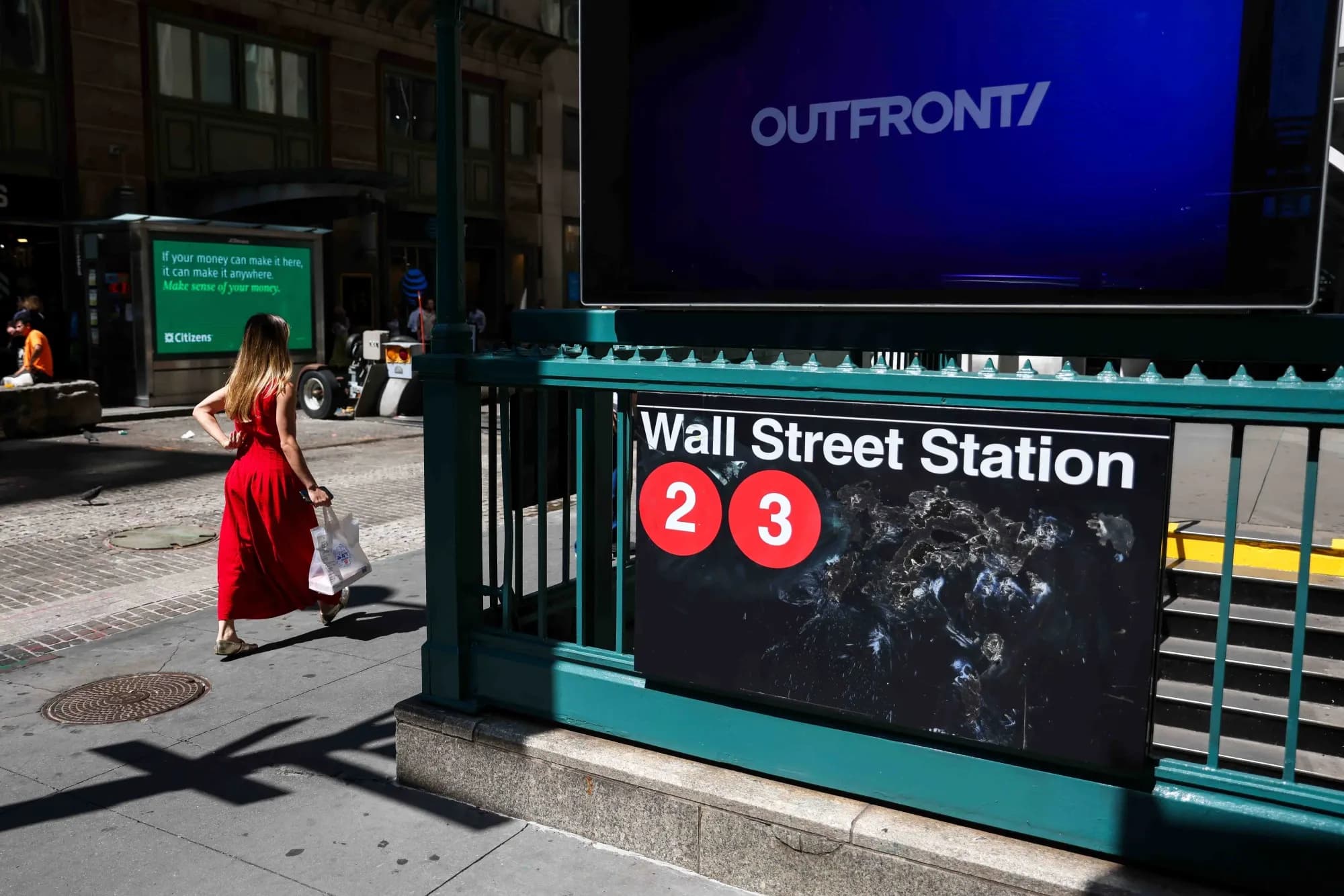
A pedestrian walking past the Wall Street Station subway entrance in New York · Source: Michael Nagle/Bloomberg
Wall Street's relationship with the AI trade has turned openly contradictory. Bank of America's October fund manager survey found 37% of respondents raised their technology allocations, the most since 2020, even as 45% said they expect an AI bubble to form by 2027. Only 42% said they see no bubble forming at all, leaving the investing community roughly split on a question it keeps answering with its wallet rather than its stated views.
Hedge funds selling even as managers buy
The split showed up in trading behavior too: hedge funds sold technology stocks at their fastest pace in two years during a rout last Thursday, Wall Street's worst session since July. Rising oil prices above $116 a barrel on U.S.-Iran tensions, climbing Treasury yields, and a rotation out of growth stocks and into defensive sectors all weighed on sentiment, even as long-term believers kept adding to positions on the dip.
What the 'denial phase' actually refers to
Barclays strategist Alex Altmann estimates AI-related spending will drive roughly three-quarters of S&P 500 earnings growth next year, with semiconductors alone responsible for about two-thirds of that figure. Altmann, speaking on Bloomberg's Odd Lots podcast, warned that investors remain in a "denial phase" about how much of that growth rests on financing structures that have yet to be tested by a real downturn. He pointed specifically to the web of vendor-financing and circular investment deals among chipmakers, cloud providers and AI labs, arrangements in which a supplier helps fund its own customer's purchases, which can make underlying demand look sturdier on paper than it would if each company were financing its AI buildout independently.
That structure is not illegal or even unusual in capital-intensive industries, but it does mean a slowdown at any one link in the chain could ripple through the others faster than investors currently expect, which is the specific risk Altmann says the market has not yet priced in.